
Rhythmic Subdivision in the C Major Scale
Exercise Objective
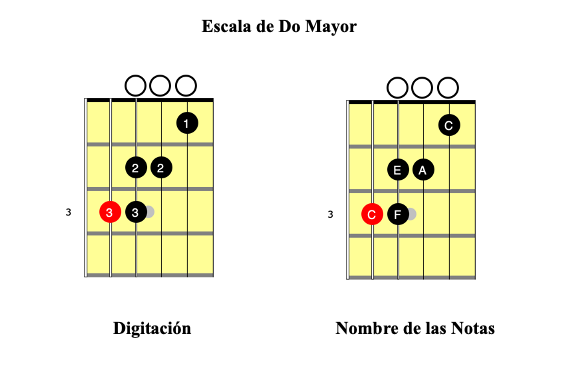
The objective of this exercise is to learn how to subdivide crotchets, eighth notes and sixteenth notes in the C major scale, without changing from one figure to another within the scale. It is a fundamental step before approaching the combination of different rhythmic figures.
Part 1: Black Subdivision
- Explanation: Each note of the scale is equivalent to one beat of the metronome.
- Practical:
- Set the metronome to 60 BPM.
- It goes up and down the scale playing one note per pulse.
Example:
- C (pulse 1), D (pulse 2), E (pulse 3)… until the scale is completed.
- When descending: C (pulse 1), B (pulse 2), A (pulse 3) … up to low C.
Rhythmic Diagram:
C | D | D | E | E | F | G | G | A | B | B | C | (Rise)
Part 2: Subdivision in Quavers
- Explanation: Now we subdivide the pulse into two notes per pulse.
- Practical:
- Set the metronome to 60 BPM.
- Play the same note twice on each pulse.
Example:
- C-Do (pulse 1), D-Re (pulse 2), E-E (pulse 3) …
- When descending: Do-Do (pulse 1), Si-Si (pulse 2), La-La (pulse 3) …
Rhythmic Diagram:
| Do-Do | Re-Re | Mi-Mi | Fa-Fa | Sol-Sol | La-La | Si-Si | Do-Do | Do-Do |
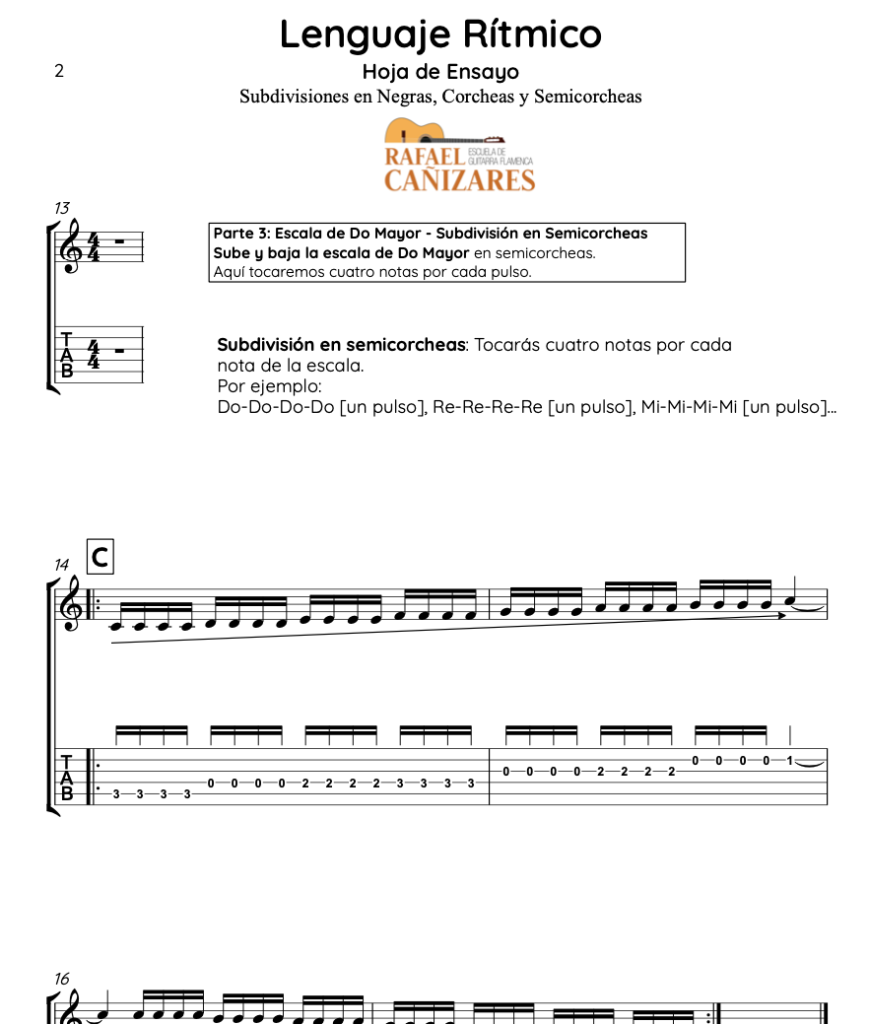
Part 3: Subdivision in sixteenth notes
- Explanation: Here we subdivide the pulse into four notes per pulse.
- Practical:
- Set the metronome to 60 BPM.
- Play the same note four times on each pulse.
Example:
- Do-Do-Do-Do-Do-Do (pulse 1), Re-Re-Re-Re-Re (pulse 2), Mi-Mi-Mi-Mi-Mi (pulse 3) …
- When descending: Do-Do-Do-Do-Do-Do (pulse 1), Si-Si-Si-Si-Si (pulse 2), La-La-La-La-La (pulse 3) …
Rhythmic Diagram:
| Do-Do-Do-Do-Do-Do | Re-Re-Re-Re-Re | Mi-Mi-Mi-Mi-Mi | Fa-Fa-Fa-Fa-Fa |
| G-G-G-G-G-G-G | A-La-La-La-La-La-La | B-B-E-E-B-E-B-E | C-D-D-O-D-D-O-D-O |


Leave a Reply
Want to join the discussion?Feel free to contribute!