
Falsetas Bulerías: Techniques and Composition
Introduction
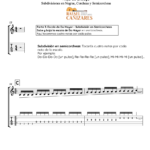
Bulerías is one of the most dynamic and complex palos in flamenco, and composing within its rhythmic structure offers an exciting challenge. In these two falsetas por bulerías, several fundamental guitar techniques are presented, which not only enrich the interpretation, but also serve as a basis for compositional creativity.
Techniques Employed
- Arpeggios
-
-
- Ascending arpeggios with thumb-index combination.
- Rhythmic variations in the arpeggio pattern.
-
- Strumming
-
- Different strumming patterns.
- Clamp
- Trident
- Different strumming patterns.
- Rhythmic elements
- Rhythmic forks within the measure.
- Variations on the bulería compás, respecting its essence.
Structure of the Falsetas
These falsettos have been designed for:
- Develop a natural melodic flow.
- Facilitate smooth transitions between sections.
- Maintain the bulería compás as the central axis.
- Harmoniously linking the techniques used, creating coherence.
Pedagogical Objective
With these compositions we are looking for:
- Demonstrate how to integrate flamenco techniques into an original composition.
- To inspire new creative ideas within the framework of bulerías.
- To provide practical resources for technical and musical development.
- To highlight the importance of a balance between technique and expressiveness.
Conclution
These falsetas not only illustrate the use of advanced techniques, but also invite the guitarist to explore his own musical language. Through the video that accompanies this article, you can discover how these resources can be applied in your own compositions, enriching both your technique and your creativity.

Leave a Reply
Want to join the discussion?Feel free to contribute!