
Juan Carlos Romero – Discography
The guitarist and composer Juan Carlos Romero, presents his latest album, “El que va conmigo y yo”, featuring, among others, La Macanita, Marina Heredia and Trio Arbós.
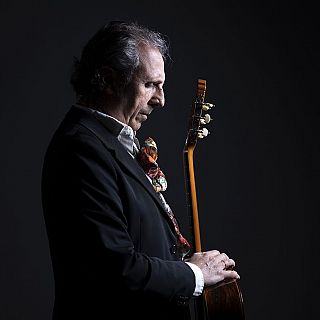
- New album: El que va conmigo y yo
- Concept of the album: It reflects an unknown facet of his musical personality. It is a declaration of intentions about his artistic evolution.
- Personal confession: He expressed his initial fear that his music would be seen as a betrayal of flamenco, but decided to be true to himself.
- Meaning of the title: “We are really two, but we are many more,” expressed Romero, showing a duality in his art.
- Tributes in the disc
- Dedication to his mother: The polka dot scarf pays tribute to his recently deceased mother, highlighting her legacy: “Joy is the greatest solvent of any contrariness.”
- Tribute to Manolo Sanlúcar and Isidro Muñoz: He highlighted the importance of these figures as pillars of his life and work.
- Influences and trajectory
- First teachers: He began playing at the age of 8 under the tutelage of Miguel “El Tomate,” passing through the school of Matilde Coral and Rafael “El Negro”.
- Relationship with Manolo Sanlúcar: He considered Sanlúcar a mentor and a decisive influence in his career. Sanlúcar appointed him director of the Instituto Internacional de la Guitarra Flamenca before his death.
- Personal influences: He highlighted the closeness with figures such as Isidro Muñoz and how they helped him grow beyond music.
- Passage through the Flamenco Biennial
- Satisfaction with his presentation: He expressed that he managed to convey his artistic message to the public and that the spectators understood him, which he considered an objective accomplished.
- Reflections on music and art
- His artistic philosophy: Romero spoke about the challenge of balancing tradition and evolution, highlighting the importance of staying true to oneself.
- Emotional message: The album is an emotional and artistic nude in which she reflects her purest essence.
- Choice of key issues
- Choosing among the songs on the album was impossible for him, as each one represents an essential figure in his life: his mother, Manolo Sanlúcar and Isidro Muñoz.
- Gratitude for its beginnings
- Father as inspiration: His father was the one who planted the seed of the guitar in him.
- First teacher: Miguel “El Tomate” was key in his first steps as a guitarist.
Guitarist and composer Juan Carlos Romero released in 2024 his most recent album, entitled “El que va conmigo y yo”. This work stands out for the collaboration of renowned artists such as La Macanita, Marina Heredia and Trio Arbós, fusing traditional flamenco with elements of classical music.
In an interview, Romero expressed that this album shows a side of himself that he had not previously revealed, seeking to expose his most intimate essence.
The album has been recognized for its depth and maturity, being included in the list of the 50 best albums of 2024 by the newspaper El País.
“El que va conmigo y yo” is available on digital platforms and in physical format, allowing flamenco fans to enjoy the artistic evolution of Juan Carlos Romero.
Listen to the interview here:
Flamenco According to Juan Carlos Romero: Art, Duality and Soul
On October 21, in the program Nuestro Flamenco on Radio Clásica, journalist José María Gastelum interviewed Juan Carlos Romero to talk about his latest album, The one that goes with me and I. In a conversation full of deep reflections, Romero shared not only the details of this project, but also his vision of flamenco and art as a personal expression. Below is an excerpt from this fascinating interview, where Romero invites us to understand his music as a mirror of his life and soul.
The one who goes with me and I: duality made music
The title of the album reflects that inner duality that we all carry inside, but in Romero’s case, it is also a reconciliation between two artistic facets: that of the pure flamenco guitarist and that of the musician who explores other sound territories. For years, he feared that opening up to other aspects could be seen as a betrayal of flamenco, but now he sees it from another perspective. “Why separate one Juan Carlos from the other?” he comments in the interview. This album, he says, is the result of accepting everything that is part of him as an artist.
Jung, Borges and artistic introspection
Romero shared that his album is accompanied by phrases from Carl Jung and Jorge Luis Borges, two key influences in his life. From Jung he takes the idea of looking inward as an act of awakening, while from Borges he rescues the reflection on the limits of reason in the face of art. “Art has no logical rules. It is pure feeling, intuition and mystery,” Romero explained, reinforcing the idea that music cannot be understood with the mind, but with the heart.
Innovation from tradition
In this interview, Gastelum highlighted how Romero manages to surprise with unconventional tonalities and unique harmonic twists, especially in pieces such as the soleá dedicated to Manolo Sanlúcar and the taranta Compadre Isidro. Although Romero assures that he does not seek novelty for its own sake, his way of working takes flamenco down unexplored paths. “In the search for your own language, sometimes you find new things without realizing it,” he said.
Music as therapy
For Romero, composing is a therapeutic process. Each piece he creates is connected to a personal experience. “When you compose, it’s like turning yourself inside out and contemplating yourself,” he confessed. His music not only tells stories, but also helps him process experiences he thought he had forgotten, showing that art can be an act of healing.
Collaborations and richness of sound
The album El que va conmigo y yo features the participation of great artists such as Carmen Molina, Israel Moro and the Arbós trio, who contribute their talent to create a rich and varied sound mosaic. From fandangos de Huelva to pieces close to chamber music, Romero’s work combines tradition and modernity with an astonishing naturalness.
The power of flamenco
Romero stressed that, although he explores other styles, flamenco always leaves its mark. “It is so powerful that, whatever you do, it always appears,” he said. This makes his work a bridge between worlds, where the spirit of flamenco is kept alive in every note.
Conclusion: the art of honesty
This excerpt from the interview with José María Gastelum shows that El que va conmigo y yo is not just an album, but a declaration of principles. It is the result of a journey into the deepest part of oneself, where each note reflects the authenticity of an artist who is not afraid to show himself as he is. “When you compose to understand yourself better, music becomes invaluable,” concluded Romero. And it is precisely that sincerity that makes his work a gift for those who love flamenco and art in its purest form. The program Nuestro Flamenco continues to be a reference in the diffusion of this art, and interviews like this one are a reminder that flamenco is not just music: it is a language of the soul.
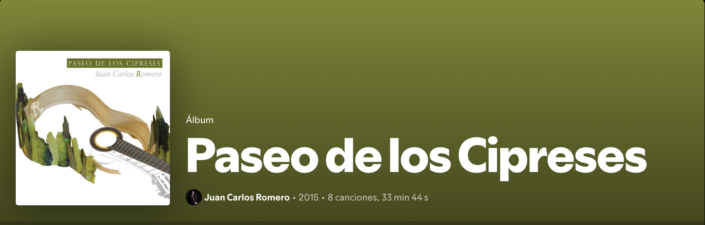
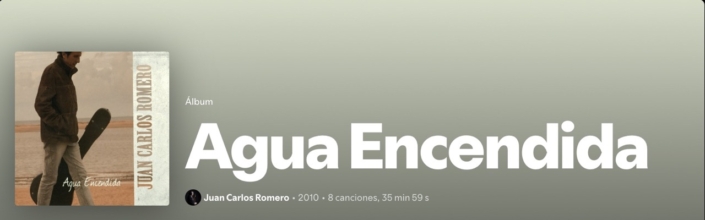
Other works by Juan Carlos Romero
Leave a Reply
Want to join the discussion?Feel free to contribute!