
El Niño Ricardo: Genius and Revolutionary of the Flamenco Guitar
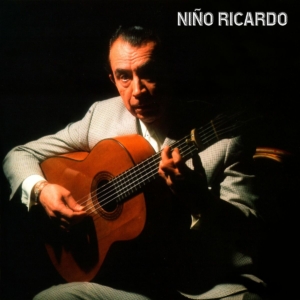
In Seville, at the beginning of the 20th century, Manuel Serrapí Sánchez, better known as Niño Ricardo, was born in the neighborhood of San Juan de la Palma. This exceptional guitarist completely transformed the way of playing flamenco guitar. He began in small Sevillian tablaos and went on to perform on the most important stages in the world. His unique technique influenced multiple generations of guitarists. He collaborated with the most important singers of his time such as La Niña de los Peines, Manolo Caracol and Antonio Mairena, creating recordings that are a reference in the history of flamenco. Niño Ricardo developed a unique way of playing the flamenco guitar, so distinctive that it is known as “Ricardismo”. His technique completely changed the possibilities of the instrument and set new standards in accompaniment and solo playing. In this article, we will explore his life through a chronological biography highlighting his achievements, influences and legacy.
Chronological Biography of Niño Ricardo
Childhood and Early Steps (1904-1918)
- July 11, 1904: Manuel Serrapí Sánchez is born in the Plaza del Cristo de Burgos (formerly Plaza de Argüelles), in Seville, in the heart of a humble family.
- His father, Ricardo Serrapí Torres, charolista and amateur guitarist, along with Antonio Moreno, a close friend, were his first guitar teachers. From the age of 10, he began to show talent and passion for the instrument.
- He worked in a coal store, which earned him the nickname“Manolo el Carbonero“. He later adopted the stage name“Niño Ricardo” in honor of his father.
- 14 years old: Javier Molina, a guitarist from Jerez, gave him his first opportunity at the Café Novedades in Seville. There he met figures such as La Niña de los Peines and Tomás Pavón, with whom he established a lasting professional relationship.
Formation and Artistic Ascent (1918-1928)
- 1920: Niño Ricardo began to stand out in the Sevillian tablaos, where his skill in accompaniment and his innovative style began to attract attention.
- 1924: He recorded his first records with La Niña de los Peines andher brother Tomás Pavón, consolidating his reputation as a great accompanist. These recordings were fundamental to establish his early style.
- 1928: He performed at the Pavón Theater in Madrid, accompanied by La Niña de los Peines, marking the beginning of his national projection.
Consolidation of Ricardism (1928-1940)
- During this stage, Niño Ricardo developed Ricardismo, a style characterized by:
- Technical innovations such as the use of the thumb and complex arpeggios.
- Melodic falsetas full of sensitivity and emotion.
- A unique ability to balance the protagonism between the guitar and the singing.
- Key collaborations: He worked with great figures such as Manuel Vallejo, El Carbonerillo and La Niña de los Peines, setting new standards in accompaniment.
- He transformed traditional styles such as soleá, siguiriya and bulería, taking them to new heights of expression.
Golden Age and Awards (1940-1959)
- 1941: He joins Conchita Piquer‘s company, expanding his repertoire by fusing flamenco with copla.
- 1945: He underwent a throat operation that left him with a deep, hoarse voice. Despite this, he continued to play, and on recordings he can be heard humming as he performs his pieces.
- During this stage, he composed great hits such as:
- The Emigrant for Juanito Valderrama.
-
- La Madrugápara Antonio Molina.
- 1955: Debuts as a soloist at the Teatro San Fernando in Seville, marking a new milestone in his career. Shortly after, he begins to perform at the Sevillian tablao Cortijo El Guajiro.
- 1949: He participates in an international tour in Mexico with Sabicas, showing flamenco art worldwide.
Artistic Maturity and Final Years (1960-1972)
- 1961-1968: He toured internationally with Antonio Molina, performing in Latin America, Belgium and France. In these tours, he combines his role as accompanist and soloist, demonstrating his versatility.
- 1968: He receives the Ramón Montoya Prize, a prestigious award that recognizes his contribution to the art of flamenco.
- During this stage, he continued to inspire young guitarists such as Paco de Lucía, who stated that Niño Ricardo was one of his greatest influences.
- April 14, 1972: He dies in Seville at the age of 67. His remains are buried in the Cemetery of San Fernando and, a year later, transferred to the pantheon of his wife, Dolores Sigüenza Díaz.
Legacy and Tributes
Posthumous recognitions:
- The proceeds from the tribute album Homenaje a Niño Ricardo. In Memoriam, recorded by guitarists such as Paco de Lucía, made it possible to finance his pantheon.
- Seville erected a monument in his honor in the Plaza del Cristo de Burgos, near his birthplace. In addition, a hotel in this square bears his name.
2. Technical and artistic impact:
- He created a guitar school that influenced later generations, such as Paco de Lucía, Manolo Sanlúcar and Serranito.
“Paco de Lucía dedicated to Niño Ricardo this heartfelt soleá, titled ‘Gloria al Niño Ricardo,’ included in his album Siroco and created from the heart.
- He introduced an innovative approach that turned the flamenco guitar into an independent art, always respecting the traditional roots.
3. Outstanding discography:
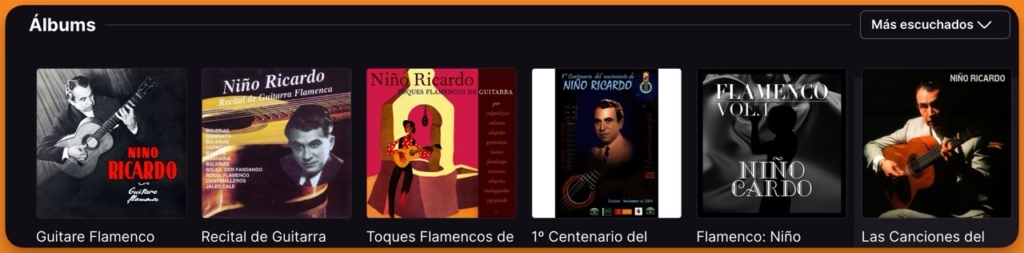
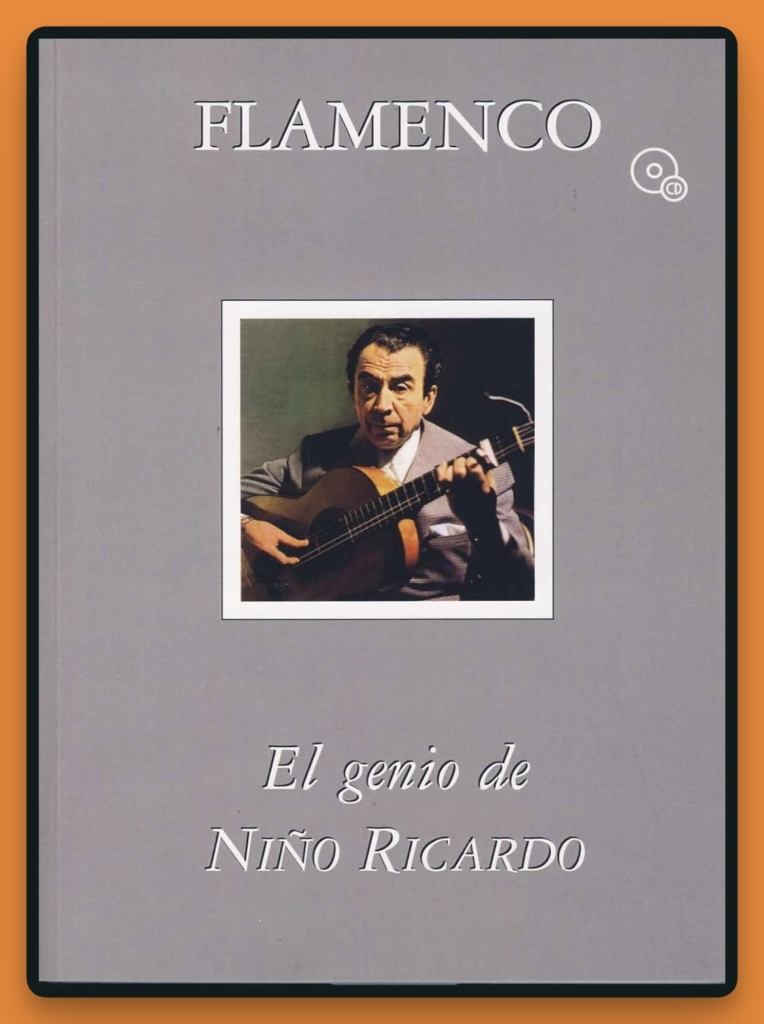
- The Genius of Niño Ricardo”.
- Great Figures of Flamenco (Vol. 11).
- Flamenco Guitar Touches. History of Flamenco
- Flamenco guitar recital
Discography with Cantaores
Ricardo accompanied most of the great cantaores of his time, leaving an invaluable legacy as an accompanying guitarist. The following is a significant sample of his discography with cantaores, highlighting his mastery and versatility:
- El Carbonerillo
- Tomás Pavón
- Manolo Caracol
- Child of Aznalcóllar
- Manuel Vallejo
- Paco Mazaco
- Antonio Rengel
- Miguel de Molina
- Pepe Marchena
- La Niña de la Puebla
This list is just a sample of the breadth of his contribution to the art of flamenco as an accompanist, marking an era and leaving his mark on the accompaniment of flamenco singing.
Conclution
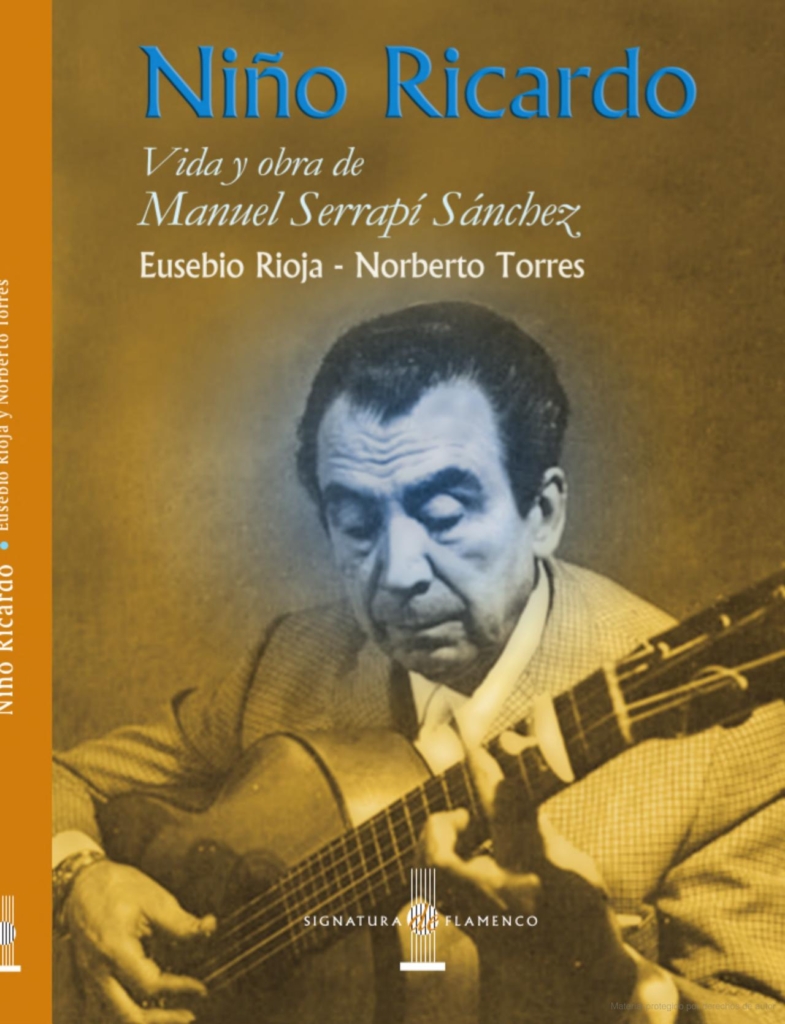
Niño Ricardo was not just a guitarist; he was a revolutionary who transformed flamenco guitar forever. His style, known as Ricardismo, lives on in every strum and falseta, inspiring musicians around the world. As Paco de Lucia said, “Without Niño Ricardo, flamenco guitar would not be what it is today.” Eusebio Rioja and Norberto Torres leave us with an immeasurable treasure for those who wish to delve deeper into the life and work of Niño Ricardo.
Audio books:
Leave a Reply
Want to join the discussion?Feel free to contribute!